
Hollywood Bathroom Remodeling Hollywood and nearby cities
Bathroom remodeling guides for Hollywood area homeowners
This library collects fourteen educational guides that help you think clearly before you build. Each one explains a single topic in plain language, and this page shows who each guide is for and the order we suggest reading them in.
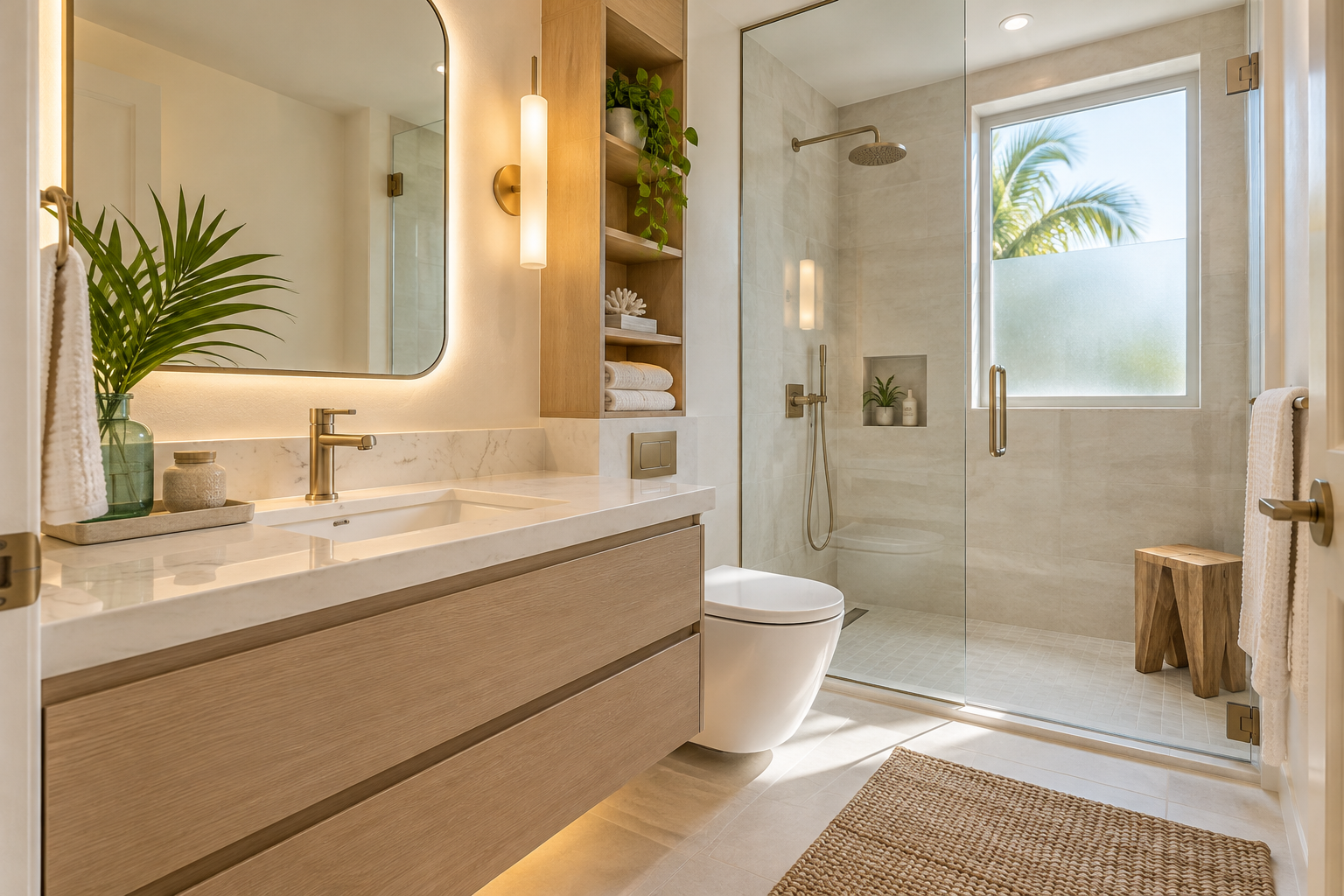
 Hollywood Bathroom Remodeling
Warm design. Clear planning.
Guide library
What this library is for
A bathroom remodel asks you to make a lot of decisions in a short span of time, often about things you have never had to think about before. What does waterproofing actually do? Does a bigger vanity always help? How is a shower floor supposed to slope? The guides in this library exist so that you can learn the answers calmly, at your own pace, before anyone asks you to choose.
They are written for homeowners and not for contractors. You will not find instructions for doing plumbing, electrical or structural work yourself, and nothing here is a substitute for a professional plan. What you will find is the reasoning behind the decisions, so that when you sit down to plan a project, the vocabulary and the trade offs are familiar.
Every guide is written with Broward County in mind. That means humid air, a mix of condominiums and single family homes, and a taste for bright, easy to clean rooms. It also means we avoid claiming rules we cannot verify. Where a topic depends on local requirements, we tell you who to ask, usually your city building department or your association.
How the guides are organized
The fourteen guides fall into four groups. The first group helps you plan the project as a whole. The second covers choices about the shower and the surfaces around it. The third looks at layout and fixtures, such as the vanity, the lighting and small room design. The fourth deals with climate, condominium living and long term comfort.
You do not need to read them in order, and you do not need to read all of them. Pick the ones that match the questions you have right now. Each guide stands on its own and links to related guides and to the service pages that explain how we approach the work.
Below you will find every guide, grouped by purpose, with a sentence about who it is for. Skim until something catches your eye, open it, and come back whenever you have another question.
A word about tone. We try to write the way a patient friend with construction knowledge would talk across the kitchen table. That means short sentences where a point is simple, longer ones where a trade off needs explaining, and honest statements about what we do not know. If a guide ever sounds like a sales pitch, treat it with suspicion; the purpose here is understanding, not persuasion.
Start here: planning and hiring
These four guides cover the project as a whole and are useful no matter what kind of bathroom you have. They are the ones to read first if you are only beginning to think about a remodel, and again later when you are comparing companies and preparing your home.
If you read nothing else, read the planning checklist and the guide on estimates. Together they will make every other conversation easier, because you will know what to bring, what to ask, and what to look for in writing.
It also helps to read the preparation guide earlier than you might think. Knowing that a bathroom remodel involves dust, noise, water shutoffs and people moving through the house can influence decisions about timing, about which bathroom to remodel first, and about how to protect nearby rooms. A little foresight turns a stressful stretch into a manageable one.
- Bathroom remodel planning checklist is for anyone who wants to gather priorities, measurements and questions before talking to a company.
- Questions to ask before hiring a bathroom remodeler is for homeowners about to compare companies and wanting to know what matters.
- Understanding a bathroom remodeling estimate is for those holding a written estimate and trying to read it with confidence.
- Preparing your home for a bathroom remodel is for households getting ready for construction and wondering how daily life will change.
Design inspiration and careful preparation.
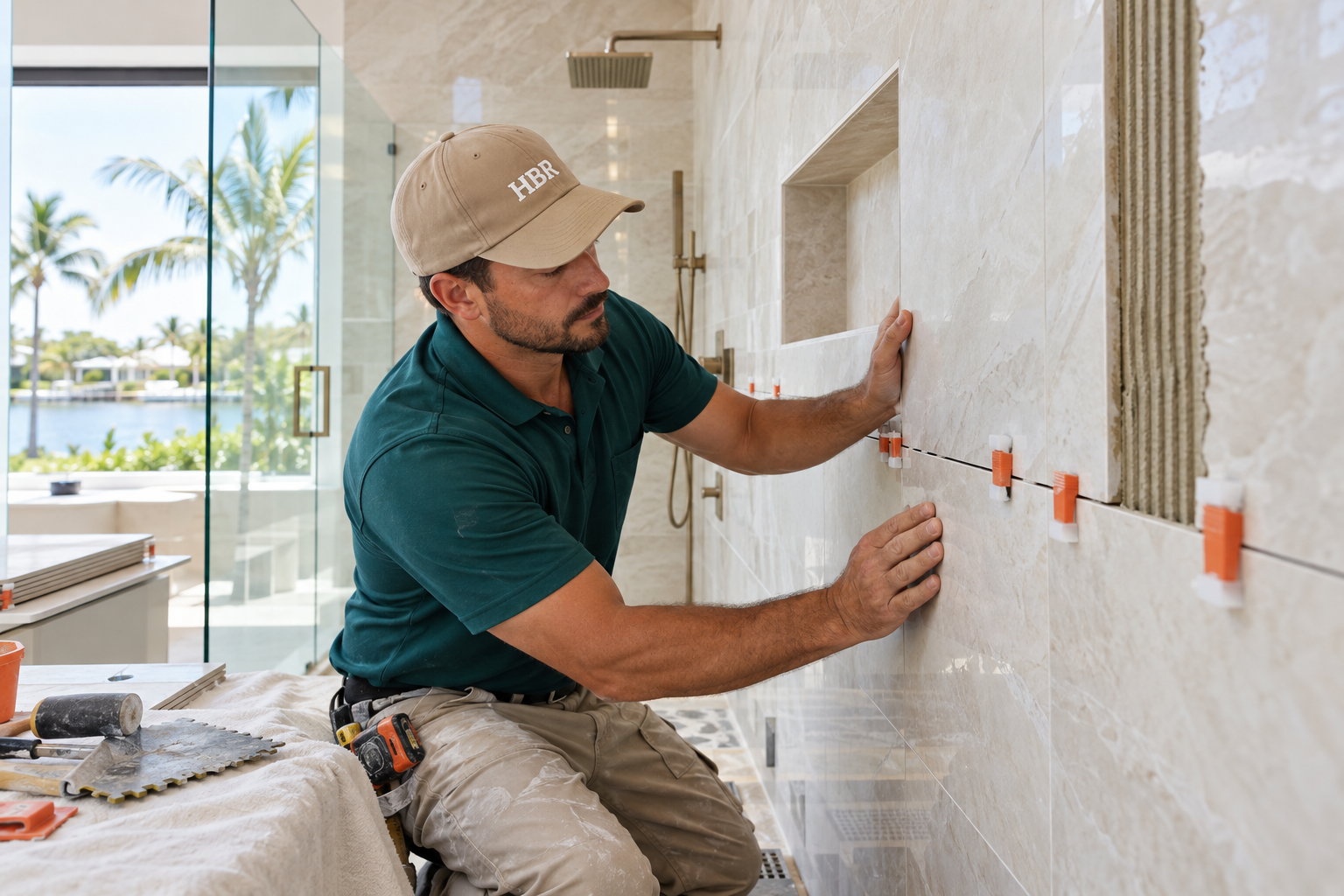
Showers, glass and surfaces
The shower is usually the heart of a bathroom remodel, and it is also where the most hidden work happens. These guides explain the choices that shape it: whether you want a walk in shower or a bathtub, how glass enclosures differ, how to choose tile for a humid climate, and what waterproofing is doing behind the finished surface.
If you are deciding between a tub and a shower, begin with the first guide in the list. If you already know you want a shower, the waterproofing guide is the one most worth your time, because it describes the part of the work that you will never see again once the tile is in place.
The glass guide is a useful middle step. Frameless and framed enclosures differ in appearance, in how they are fitted, and in how they are cleaned. Understanding those differences ahead of time helps you picture the finished shower, and it gives you something concrete to react to when you look at samples or concept imagery.
Tile choices connect everything in this group. The surface you choose affects how the shower is planned, how the floor slopes to the drain, how grout joints look, and how much cleaning the room will need. That is why the tile guide appears here, close to waterproofing and glass, rather than in a section about decoration.
- Walk in shower or bathtub is for homeowners weighing daily use, resale thinking and comfort before choosing.
- Frameless glass vs framed enclosures is for anyone comparing glass styles and wanting to understand how they differ in look and care.
- Choosing tile for a Florida bathroom is for those picking surfaces that handle moisture, cleaning and daily wear.
- Shower waterproofing explained is for homeowners who want to know what protects the walls and floor behind the tile.
Layout, vanities, lighting and small rooms
Once the shower is understood, attention turns to the rest of the room. How big should the vanity be? Where should lights go so that faces look natural in the mirror? How can a small bathroom feel open instead of crowded? These guides give you the planning logic behind each of those questions.
They are especially helpful if your bathroom is compact or if you are trying to fit more storage into the same footprint. Good planning often makes a small room feel larger than a bigger room with weak layout.
Lighting deserves particular attention because it is so often an afterthought. A single ceiling fixture casts shadows on the face and flattens a shower. Layers of light, planned with the mirror, the vanity and the shower in mind, make the same room look warmer and work better. The guide explains how general, task and accent light each play a part.
Vanity planning is a similar story. Width, depth, drawer layout and the clearance in front of it all affect how comfortable the room is to use. A vanity that looks generous in a showroom can crowd a doorway if the numbers are not checked against the actual floor plan, which is why the guide spends time on clearances.
- Vanity size and layout guide is for homeowners choosing width, depth, storage and clearances.
- Bathroom lighting layers is for anyone planning general, task and accent light together.
- Small bathroom layout ideas is for owners of compact bathrooms who want a calm, functional plan.
Climate, condominiums and living well long term
The last group takes on topics that are specific to our part of Florida or to the long view of a home. Humidity affects every bathroom here, and a well planned ventilation system protects the work you invest in. Condominium owners face a distinct set of questions about approvals and neighbors, and many households want a bathroom that will still work comfortably as needs change.
These guides are planning resources. They do not give medical advice and they do not state building rules as facts. Instead they help you think through the questions and point you toward the local offices that can answer them.
If you own a condominium, the association guide is worth reading even if you are only thinking about a remodel. Associations often have processes for notice, scheduling and approvals, and learning about them early prevents unpleasant surprises. Ask your association directly what applies, and bring the answers to the first planning conversation.
The aging in place guide is for anyone who wants a bathroom that will keep working as life changes, whether that means a lower threshold, better traction, stronger blocking in the walls or simply more comfortable lighting. It is about planning ahead, not about medical claims, and it is helpful at any age.
- Ventilation and humidity in Florida bathrooms is for homeowners dealing with moisture, mildew and lingering steam.
- Condo bathroom remodeling and your association is for owners who need to think about building and association requirements.
- Aging in place bathroom ideas is for households planning a bathroom that stays comfortable and easy to use over time.
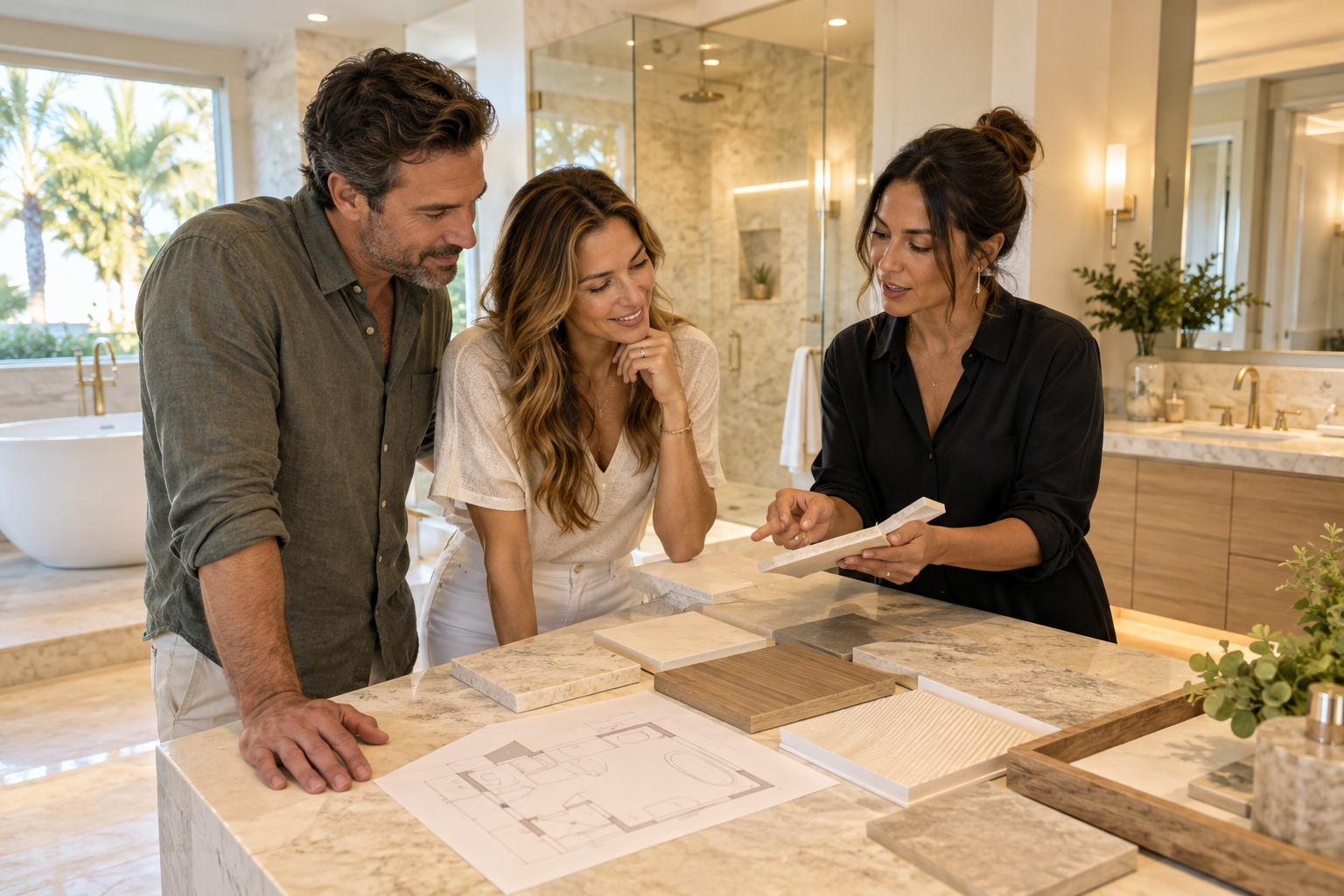
Human from the beginning
A bathroom should fit the people who use it.
We start with the everyday questions: What feels crowded? What is difficult to clean? Where do you need more storage? What would make mornings easier? Those answers help turn a collection of materials into a room that feels natural to live with.
Tell us about your bathroomA suggested reading order
If you want a path through the library, here is one that works for most projects. Begin with the planning checklist to collect your priorities. Move to the guide that matches your biggest decision: usually the shower or bathtub question, or the tile. Then read about waterproofing and ventilation, which together protect everything you choose.
Next, look at layout. The vanity guide, the lighting guide and the small bathroom guide help you test your ideas against how the room will actually be used. If you live in a condominium or expect your needs to change, add the condo guide and the aging in place guide at this point.
Finish with the hiring guides. Read questions to ask a remodeler before you meet anyone, and how to understand an estimate once paperwork arrives. When construction is close, the guide on preparing your home helps you get ready for the day work begins.
How the guides connect to our services
Each guide has a sister page in the services section. If a guide on tile makes you curious about how we handle the work, the tile installation page describes our approach. If the waterproofing guide convinces you that the hidden layers matter, waterproofing shows how we plan them. The same is true for custom showers and frameless glass and for bathroom lighting.
Think of the guides as the why and the services as the how. The guides stay general so they can help any homeowner. The services describe what we do, in the order we do it: tell us about the bathroom, build the project direction, coordinate the details, and prepare for construction by going over the plan and the information needed before work begins.
You can read the guides without any intention of working with us. They are meant to be useful on their own, and plenty of homeowners will use them to prepare for conversations with several companies. That is a good outcome for everyone.
If you do decide to work with us, the guides give us a shared vocabulary from the first conversation. You will already know what a substrate is, why a shower floor slopes to the drain, and what blocking in a wall is for. That makes it easier to talk about your project in specifics, and specifics are what turn a general idea into a clear plan that both sides understand.
Guides and your city
Where you live shapes what you need from a bathroom. A condominium near the coast, a family house farther inland, and an older home in an established neighborhood all raise different questions. Our service area page lists the city pages for Broward County, each of which links back to the guides that fit it most closely.
This works in both directions. If you start with a guide and realize your situation is specific to where you live, the city pages bring the conversation closer to home. If you start with a city page and want the reasoning behind a suggestion, the guides supply it in full.
If you are in the southern part of the county, you might start with Hollywood or Hallandale Beach. If you are in the middle of the county, Fort Lauderdale and Plantation are good places to begin, and farther north there are pages for Tamarac and North Lauderdale, and to the south pages for Aventura and North Miami Beach, among others.
The city pages talk about the kinds of homes and decisions common across the county, never about specific streets or buildings. They are a friendly way to move from general reading to thinking about your own house or condo.
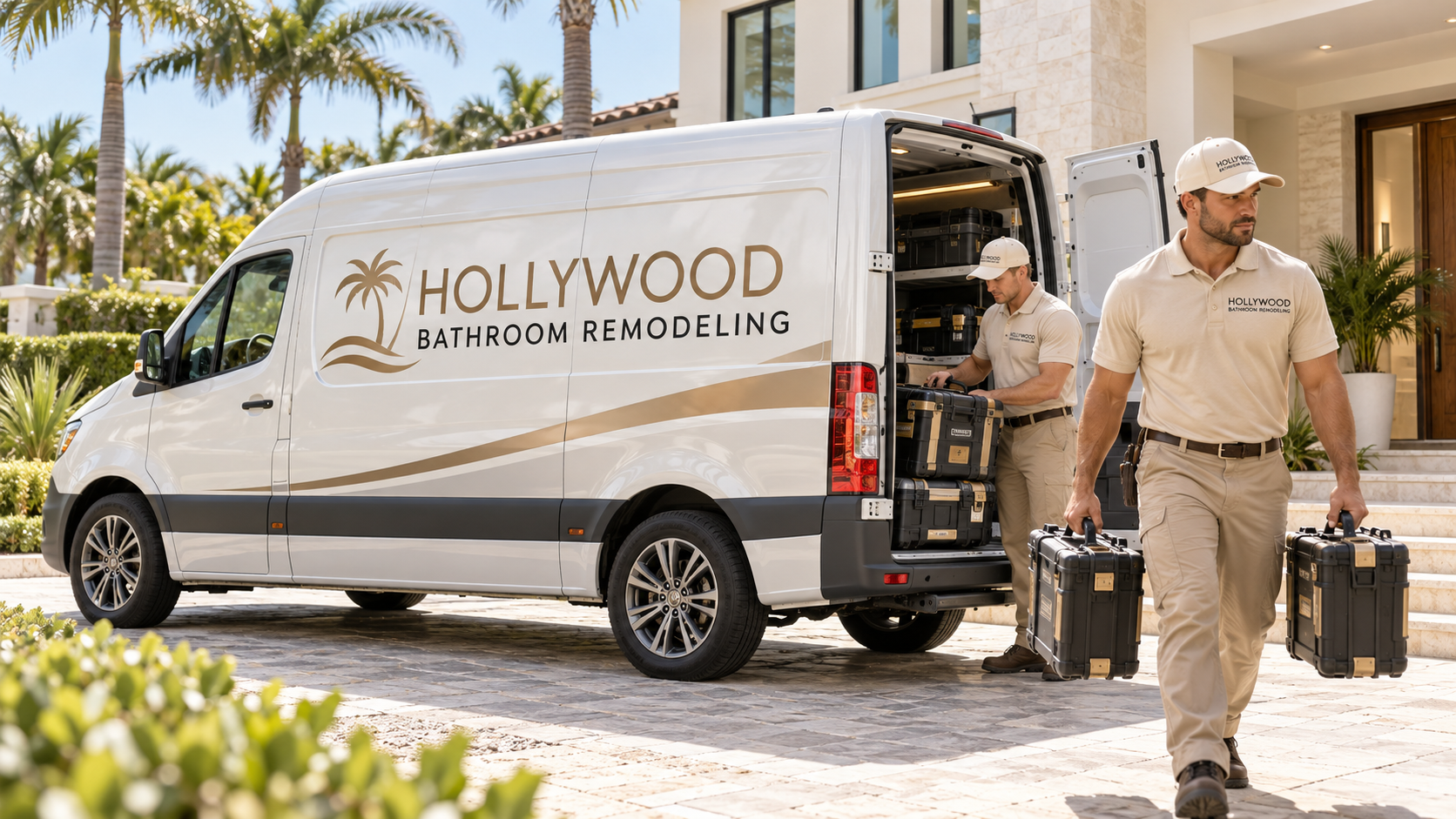
Recognizable when we arrive
The Hollywood Bathroom Remodeling van and team.
Consistent branding helps homeowners know who is arriving. The same organized presentation continues inside the project, from room protection and tools to the materials and details discussed before work begins.
See our processWhen you are ready for a conversation
Reading is useful, but at some point you will want to talk to someone about your actual bathroom. When that moment comes, use request an estimate on our home page and tell us what you have in mind. You do not need to have everything figured out. A rough idea, a few priorities and your city are enough to begin.
If you have read a few guides first, you will arrive with better questions, and that makes the conversation more productive. You may already know whether you lean toward a walk in shower, what kind of tile appeals to you, and what you want the lighting to do. Bring those thoughts with you, and we will help turn them into a plan.
Thank you for taking the time to learn before you build. A well informed homeowner is the strongest partner any project can have, and these guides are our way of helping you get there.
Good to know
Common questions
Do I need to read every guide?
No. Each guide stands on its own, so you can read only the ones that match your questions. A good starting point is the planning checklist, and then you can follow the links to whichever topics matter most for your bathroom. Many homeowners read three or four before they feel ready to talk to a company.
Are the guides instructions for doing the work myself?
No. The guides explain concepts and planning decisions so you can make informed choices. They do not give instructions for plumbing, electrical or structural work, which should be handled by professionals. Think of them as a way to understand what is being done and why, not a manual for doing it.
Do the guides state building codes or condo rules?
They do not state specific rules as facts, because requirements vary by city and by building. Instead they tell you what to ask your city building department and your association. Always confirm requirements with the proper local office before work begins, and keep their answers with your paperwork.
Which guide should I read first?
Start with the bathroom remodel planning checklist. It helps you collect priorities, measurements and questions in one place, and it points to the other guides when a topic needs more depth. After that, move to whichever decision feels biggest, such as the shower or the tile.
Do the guides apply outside Broward County?
Many of the ideas are general, but the guides are written with Broward County in mind, including humidity, condominium living and local planning habits. Our service area is Hollywood and the nearby cities within about 15 miles, across Broward and Miami Dade counties. If you live elsewhere, treat the guides as general education and check local requirements where you live.
How often will new guides be added?
The library may grow over time as homeowners ask new questions. For now it contains fourteen guides covering planning, showers and surfaces, layout and fixtures, and climate and long term comfort. If there is a topic you wish we had covered, tell us when you contact us through the home page form.
Your bathroom starts with a conversation