
Hollywood Bathroom Remodeling Hollywood and nearby cities
How to Prepare Your Home for a Bathroom Remodel
A little preparation makes a remodel feel calmer. This guide covers protecting rooms, pets, water shutoff in general terms, using another bathroom, handling deliveries and making decisions before the work begins.

 Hollywood Bathroom Remodeling
Warm design. Clear planning.
Before construction
Preparation is part of the project
Most people think of a remodel as the days when walls come down and tile goes up. The experienced view is different: a good share of the success of a project happens before anyone arrives with tools. The choices you make about your home, your household and your decisions in the weeks beforehand shape how smoothly everything unfolds.
Preparation does not need to be elaborate. It is mostly a matter of thinking through the ordinary details of living in a house while part of it is under construction. Where will people wash? Where will the dog stay? Who will be home when materials arrive? Answering these questions early removes the little frictions that otherwise pile up.
This guide is written for homeowners in Broward County who are planning a project and want to know what to expect from their side. It does not replace advice from your contractor, who knows your particular plan. It is a companion you can read with a coffee and a notepad. When you are ready to talk about your own bathroom, you can request an estimate and we will begin with a conversation.
One more idea before you dive in: write down your own goals for the project in a sentence or two. Maybe you want a shower that is easier to step into, or a vanity with real storage, or a room that finally feels calm. When you hit a decision that seems confusing later, that sentence helps you choose, and it keeps the project pointed in the direction you care about.
Make the big decisions in advance
Of everything on this list, decisions are the one that matters most. A remodel moves along smoothly when the choices have been made: the layout, the tile, the fixtures, the vanity, the lighting and the glass. When a choice is still open once construction begins, someone has to wait, and waiting is where projects lose their rhythm.
Gather your selections into one place, with names, finishes and sizes written out, along with photos if you have them. Walk through the plan with your contractor and ask what must be confirmed before work starts. Some items, such as made to measure glass or special order pieces, depend on earlier steps being complete, so ask about the order of things.
Our planning process is built around this idea. We start by hearing how you use the bathroom, build the project direction around scope, layout, materials and priorities, and coordinate the details so that surfaces, fixtures, storage, lighting and wet areas fit together. Our bathroom remodel planning checklist is a helpful place to organize your list.
Be honest about what you do not yet know. If you are torn between two tiles or two vanity styles, ask for samples and live with them for a few days at home. Look at them in morning light and evening light, and set them beside your towels and your paint. Choices that feel right in your own house tend to still feel right after the work is done.
Protecting the rest of your home
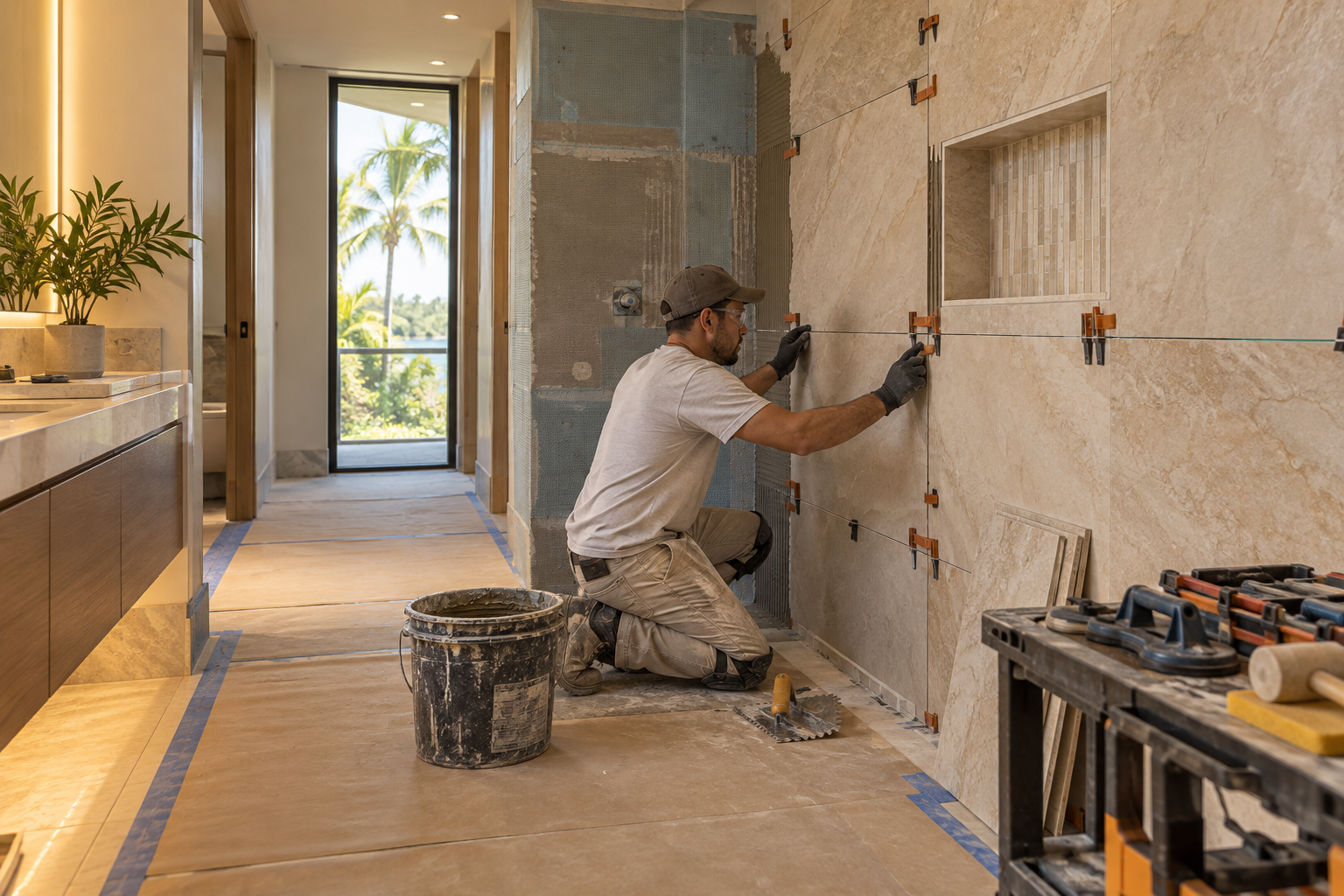
The work area is only part of your house, and the rest of it deserves protection. Dust, foot traffic and carried materials can touch floors, walls and furniture all along the route to the bathroom. Ask your contractor how the path will be protected, and what happens at the edge of the work area, such as a plastic barrier or floor covering.
You can help by clearing the route. Move small furniture, rugs, art and breakable objects out of the hallway and the rooms next to the bathroom. If the path passes through a bedroom or a living room, think about whether it is worth emptying a corner or covering large pieces. It is easier to put things back than to repair something that was in the wrong place.
A company that protects its work areas and plans before building is thinking about this too. At Hollywood Bathroom Remodeling, we treat protection as a normal step, not an extra. Ask any contractor you consider how they cover floors, seal off doorways and handle cleanup at the end of each day, and listen for specific answers.
Floors deserve particular care, especially wood, stone or tile that scratches. Heavy boards or sheets of protective material laid along the path can spread the load of carts and boxes. Doors and door frames along the way are easy to chip, so ask whether they will be padded. A few minutes of padding saves a lot of touch up later.
Design inspiration and careful preparation.
Pets, children and household routines
Pets are curious, and a house with open doors, strange noises and unfamiliar people can be stressful for them. Think about where your pet will spend the day. A quiet room at the far end of the house, a trusted friend, or a boarding arrangement may be kinder than leaving them to wander near the work area.
Doors that stay open are an escape risk for cats and dogs alike. Ask the crew to keep the door to the work area closed, and make sure everyone who comes and goes knows a pet is in the house. Put a note on the front door if that helps. Keep food, medication and toys out of the work area so nothing is lost or damaged.
Children need a plan too. Tools, sharp materials and stored supplies are not for little hands. Explain in simple words that part of the house is off limits for a while, and set up a place that is theirs. Routines matter, so try to keep mealtimes and bedtimes as steady as you can during the project.
If someone works from home, think about call times and quiet space. Noisy stages of demolition can fill a house, and a video call in the next room may be difficult. Ask your contractor which days are likely to be loudest, then plan to work elsewhere or schedule meetings around them. Sharing the plan ahead of time avoids awkward surprises.
Water shutoff, in general terms
At some stage of a bathroom remodel, water to the room is turned off. Often this is done at a valve near the fixtures, and sometimes at a larger valve for part or all of the home. It helps to know where your main shutoff is before the project begins, so that you are not searching for it in a hurry if a problem arises.
Take a moment to locate it and make sure it turns. Show other adults in the household. If you live in a condo, the shutoff may be controlled by the building, so ask your association how it works and what notice they need. Our guide to condo bathroom remodeling and your association covers questions to raise.
Please leave the plumbing work itself to professionals. The point here is awareness, not do it yourself work. Knowing where the shutoff is, who may operate it and what to do if water appears unexpectedly is enough. Ask your contractor to explain how they will handle water during the project, and keep their contact information where you can find it.
Ask also about the waterproofing that protects walls and floors once the shower is built. Moisture control is one of the main reasons a remodel needs careful sequencing, and the work cannot skip through steps that need to settle. Our shower waterproofing explained guide shows what happens behind the tile.
Planning for alternate bathroom use
If this is your only bathroom, plan for the days when it is unavailable. That might mean a second bathroom elsewhere in the house, a gym or a family member nearby for showers, or another arrangement that works for your household. Talk with your contractor about when the room will be out of use so that you can plan around it.
If you have a second bathroom, give it a little attention before the project begins. Clear the counter, stock it with towels and daily supplies, and make sure it is clean and comfortable. The household will rely on it, and it may see more use than usual. It also helps to move any items that are normally stored in the work bathroom.
Think about the small routines too: where you will brush teeth, store medications and get ready in the morning. A tray or a bin of daily supplies that moves to the alternate bathroom keeps life flowing. Planning for these details, even on paper, will make the project feel much less disruptive.
Guests are worth a thought as well. If you are expecting visitors during the project, tell them the bathroom situation in advance, or consider scheduling the work so it does not collide with a holiday or event. A calm household makes decisions more easily, and a spare room or a friend's bathroom can solve a lot of small problems.
Human from the beginning
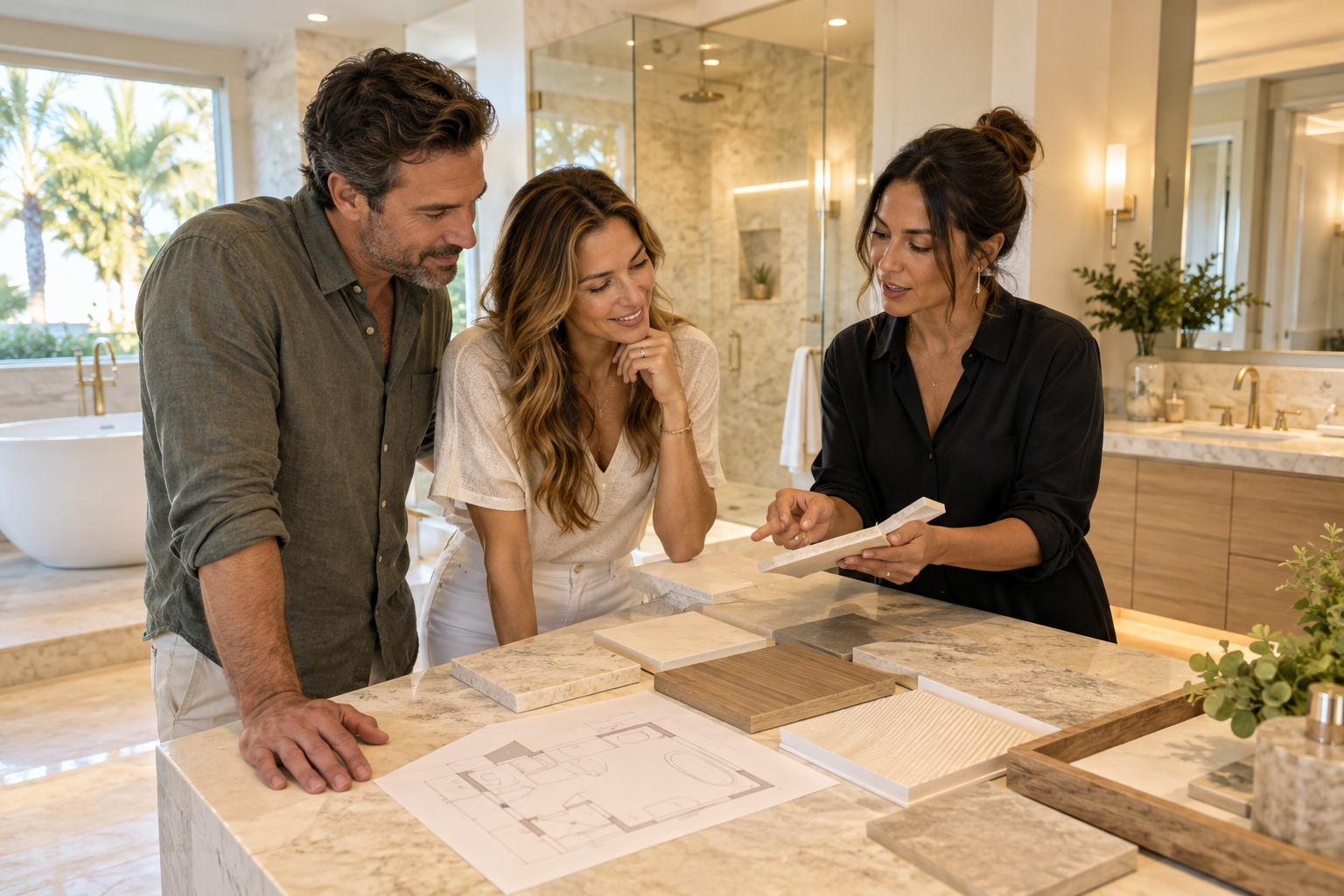
A bathroom should fit the people who use it.
We start with the everyday questions: What feels crowded? What is difficult to clean? Where do you need more storage? What would make mornings easier? Those answers help turn a collection of materials into a room that feels natural to live with.
Tell us about your bathroomDeliveries, storage and access
Materials arrive on their own schedule, and a plan for receiving them prevents stress. Decide where deliveries will go: a garage, a spare room or a protected corner. Large items such as vanities, glass or tile need a dry, safe place with a clear path to the work area. In a condo, remember that elevators and loading areas may have their own rules.
Think about who will be home. Someone should be available to let the crew in, answer questions and receive packages, or you can arrange for a lockbox or another approach that works for your household. Give the crew clear information about parking, gate codes and any areas of the house that are off limits.
Keep a short list of deliveries and their expected arrival so that you can check them off. If something arrives damaged or incorrect, tell your contractor right away. Early notice helps keep the order of work intact, since later steps often depend on earlier materials.
Tile and stone deserve one extra note. Boxes are heavy, and material from different lots can vary slightly in color, so ask whether everything for the room should be ordered together. Count the boxes against the plan, and store them flat and dry. Surplus pieces are useful for future repairs, so keep a few in a labeled box.
Clearing the bathroom itself
Before work begins, empty the bathroom. Take out towels, toiletries, medications, art, rugs and anything else that is not part of the construction. Removing these items protects them from dust and moisture, and it gives the crew a clear room. Decide what you will keep, donate or throw away.
Think about the fixtures you plan to reuse, if any. If a mirror, a light fixture or a piece of hardware has sentimental or practical value, tell your contractor in advance and ask whether it can be saved safely. Old items sometimes cannot be removed without damage, and it is better to know that before the day arrives.
Photograph the room from several angles before anything is touched. These pictures serve as a record of the room as it was, and they help if there is ever a question about existing conditions. They also give you a lovely before picture to compare with the finished result.
Take note of anything that already concerns you, such as a soft spot in the floor, a stain on a ceiling, a slow drain or an old fan that rattles. Tell your contractor about these before work starts. Hidden conditions are sometimes discovered when walls open, and the more your contractor knows ahead of time, the better the plan can account for it.
Communication, dust and daily life
Agree on how you and your contractor will talk. Some households prefer a short daily check in, others a weekly summary, and others a written list of questions. What matters is that you both know the plan and that decisions are recorded. A simple shared note on your phone can keep questions from getting lost.
Dust is part of any remodel, even with careful protection. Close vents near the work area if your contractor suggests it, and cover items you cannot move. If someone in the household has allergies or sensitivities, mention it early so the crew can pay attention to containment and cleanup. A damp cloth on nearby surfaces helps.
Be gentle with yourself about the disruption. A remodel is a temporary inconvenience in exchange for a room you will enjoy for years. Having a plan for meals, quiet spaces and breaks from the noise keeps the experience bearable, and a reliable contractor will do their part to keep the work area tidy and the schedule clear.

Recognizable when we arrive
The Hollywood Bathroom Remodeling van and team.
Consistent branding helps homeowners know who is arriving. The same organized presentation continues inside the project, from room protection and tools to the materials and details discussed before work begins.
See our processA short preparation checklist and where to go next
Pulling it together, a good preparation list is short. Confirm your selections and the plan. Clear and photograph the bathroom. Protect the route through the house. Arrange for pets and children. Locate the water shutoff. Set up an alternate bathroom. Plan for deliveries and storage. Agree on communication. If you do these things, the project begins on solid ground.
Our final step before building is to prepare for construction by going over the plan and the information needed before work begins. That is the moment to ask anything that is still open. If you are in a condo, include the association's requirements. If you are choosing tile or glass, our guides on choosing tile for a Florida bathroom and questions to ask a bathroom remodeler may help.
If you would like to understand how the paperwork looks on your side, read our guide to understanding a bathroom remodeling estimate. Whenever you feel ready, request an estimate and tell us about your bathroom, your household and what you would like to change.
Good to know
Common questions
When should I start preparing for a remodel?
Start as soon as you decide to go ahead, because many preparation steps involve choices rather than packing. Gather your selections, think about where the household will wash, and talk with your contractor about the plan. Physical steps like clearing the room and protecting the route come closer to the start of construction.
Do I need to move out during a bathroom remodel?
Most households stay in the home, particularly when there is a second bathroom to use. Whether it works for you depends on your layout, your household and how you feel about noise and dust. Talk it through with your contractor so that you know when the bathroom will be unavailable.
How should I plan for pets during the work?
Pick a quiet area away from the work, keep doors closed so animals cannot slip out, and let everyone coming and going know a pet is in the house. Some households choose a boarding arrangement or a friend for the louder days. Keep food and toys out of the work area.
Should I know where my water shutoff is?
Yes. Find your main shutoff before work begins, make sure it turns, and show other adults. In a condo, the building may control the valve, so ask your association how it works. Leave plumbing work to professionals; the goal is simply to be prepared if water appears unexpectedly.
What should I do about deliveries?
Choose a dry, secure place for materials, such as a garage or spare room, and keep the path to the work area clear. Make sure someone can receive packages or let the crew in. Check items when they arrive and tell your contractor right away about any damage or errors.
What decisions should be made before work starts?
Layout, tile, fixtures, vanity, lighting, glass and finishes should be chosen, written down and confirmed with your contractor. Open decisions slow the project, because later steps often depend on earlier ones. A written selections list prevents misunderstandings and keeps the work moving in the right order.
Your bathroom starts with a conversation