
Hollywood Bathroom Remodeling Hollywood and nearby cities
Questions to ask before you hire a bathroom remodeler
A good conversation with a remodeler is half listening and half asking. This guide gives you the questions that matter, why each one matters, and what a clear answer sounds like before you commit to anything.

 Hollywood Bathroom Remodeling
Warm design. Clear planning.
Hiring with confidence
Why the questions matter more than the sales pitch
Most bathroom remodeling problems do not start with bad tile or a leaky valve. They start with two people who thought they agreed on something and later found out they did not. A pleasant first meeting can hide those gaps, because everyone is polite and the project still lives in the imagination.
Questions bring the gaps to the surface while it is still easy to fix them. When you ask how a wall will be prepared, who orders the vanity, or what happens if a hidden problem turns up behind the shower, you are not being difficult. You are helping both sides build the same picture of the same bathroom.
Plan to ask the same questions of every company you talk to, and write down the answers as you go. Memory is unreliable after the third conversation, and small differences in wording often point to real differences in how the work is run. If you have not yet gathered your own priorities, the bathroom remodel planning checklist is a good place to start before you pick up the phone.
It also helps to decide in advance which questions are dealbreakers for you. For one household it may be how the crew treats the home. For another it may be how clearly changes are written down. Knowing your own priorities keeps you from being swayed by a charming presentation that does not address what you care about most.
Questions about scope: what is actually included
Scope is the list of work that will be done, and it is the single most important thing to pin down. Ask the remodeler to describe, in plain sentences, what will be removed, what will be rebuilt, and what will stay exactly as it is today. A remodel that includes the shower, the floor and the vanity is a different job from one that also moves a drain or relocates a wall.
Ask what happens to the surfaces around the work. If the old shower walls come out, who patches and paints the adjacent wall? If the floor tile changes, does the transition into the hallway get handled, and who deals with the baseboard? These edges are where a project feels finished or feels unfinished, and they are easy to leave out of a conversation.
Then ask what is not included. A confident remodeler will not be bothered by this question, and the answer tells you where the boundaries are. Typical gray areas include paint, accessories, mirrors, shelving, towel bars and the disposal of old materials. Having those items named on paper means nobody is surprised later.
It is worth asking how the remodeler thinks about layout as well. If you want a walk in shower where a tub now sits, or a vanity that is wider than the old one, ask how the new arrangement affects door swings, clearances and storage. A short conversation about how you move through the room can save a long conversation after the walls are closed.
- Ask for the scope to be written as a list of rooms, surfaces and fixtures, not a single summary line.
- Ask which parts of the bathroom will be opened up and which will be left alone.
- Ask who handles patching, painting and trim around the finished work.
- Ask how removal and disposal of old materials is handled.
Questions about schedule and day to day communication
Every homeowner wants to know how long the work will take, and a thoughtful remodeler will talk about sequence before talking about dates. Ask what the order of work looks like: demolition, rough in for plumbing and electrical, wall and floor preparation, waterproofing, tile, then the fixtures and finishing steps. A person who can walk through that order is usually a person who has planned it.
Ask what could change the schedule and how you will hear about it. Special order items, a delayed delivery, or a hidden condition can all move things around. What you want to hear is a clear habit of telling you early, not a promise that nothing will ever shift. Be wary of any answer that sounds too smooth to be true.
Then settle the practical details of communication. Who is your point of contact, and how do they prefer to be reached? Will you get updates on a set rhythm, or only when something happens? Where will decisions be written down? Agreeing on this at the start spares everyone the frustration of a message that sits unanswered while a decision is waiting.
Finally, ask how the household will cope during the work. If this is your only bathroom, the plan for water, access and daily routines matters a great deal. Talk through shutoff periods, where you will wash and dress, and how you will be told in advance when water will be off. Practical planning of this kind is a sign of a company that respects the people living in the home.
Design inspiration and careful preparation.
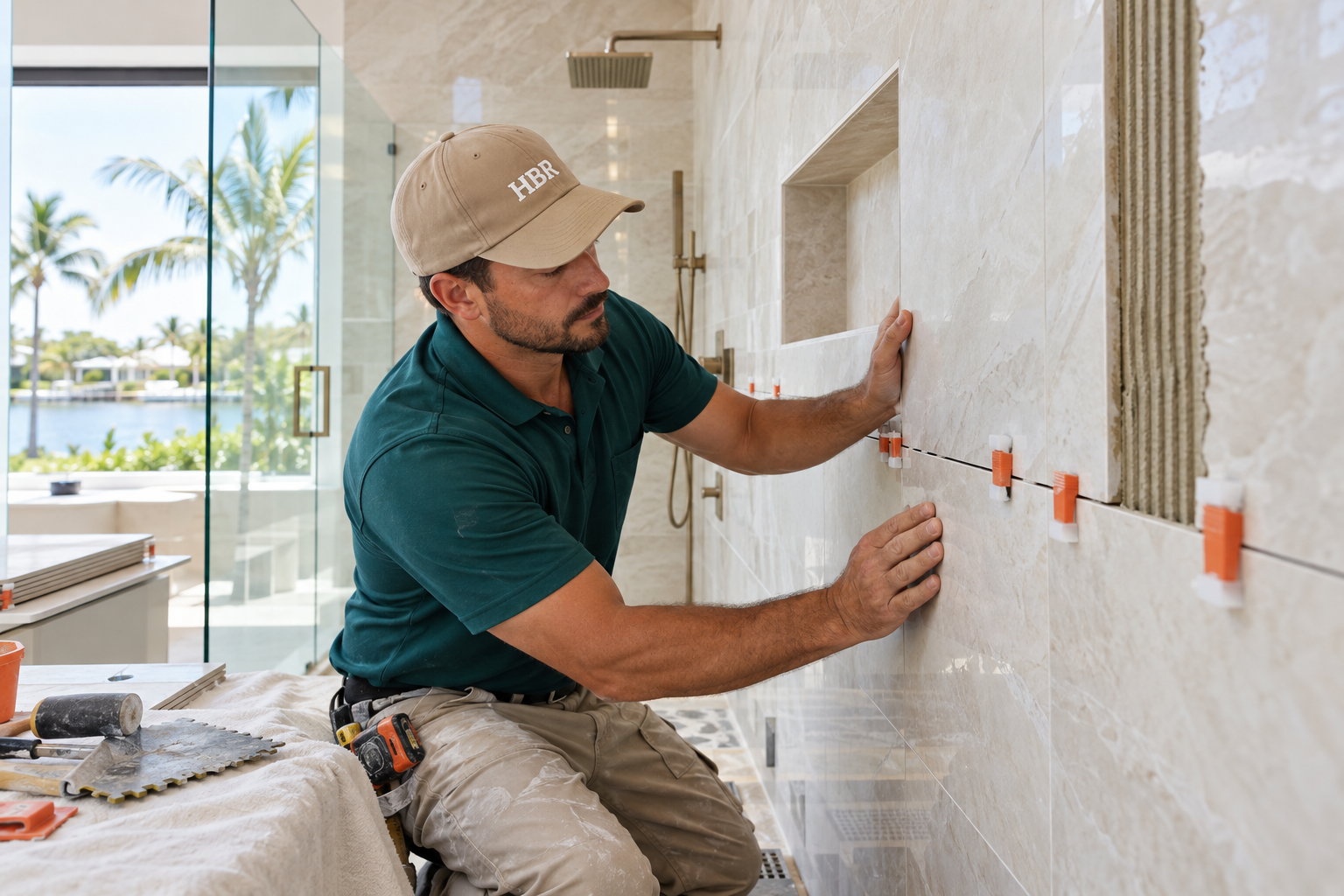
Selections: who chooses, who orders, who is responsible
Selections are the finishes and fixtures you choose: tile, grout color, vanity, faucets, shower trim, lighting, mirrors and glass. Ask when each one needs to be decided, because late decisions are one of the most common reasons a project stalls. A good plan has a date by which each major selection should be final, and it works backward from the point where that item is needed on site.
Ask who orders each item and who checks it when it arrives. If you order your own tile, someone should confirm the quantity, the lot and the condition before it goes on a wall. If the remodeler orders it, ask how substitutions are handled when something is unavailable. Both approaches can work, but only if the responsibility is named.
Ask how overage and spare material are handled. Tile in particular should be ordered with extra for cuts and for future repairs, and the leftover pieces are worth keeping somewhere safe. Our guide on choosing tile for a Florida bathroom explains what to weigh before you place an order.
Ask about lead times for glass, custom vanities and special order tile too. Frameless glass is usually measured after the shower is built, which means it is ordered late in the process. Knowing that sequence in advance explains why a shower can look finished except for the glass, and it lets you plan around it instead of worrying.
How changes are handled once work has started
Changes will happen in almost every remodel. You may see the tile on the wall and want a different border, or an opened wall may reveal a pipe in an unexpected place. The question is not whether changes occur, but how they are priced, approved and recorded.
Ask what the process is when you want to change something. A solid answer usually involves a written description of the change, a clear statement of what it adds or removes, and your approval before the work proceeds. A handshake agreement in the middle of a busy day is exactly how misunderstandings begin, so ask whether changes are always put in writing.
Ask about hidden conditions as well. Behind old tile and under old flooring, a bathroom can hide soft framing, outdated drain lines, or moisture damage that nobody could see during the first visit. Ask how the remodeler tells you when this happens, what options you will be offered, and whether you can see the condition for yourself before deciding.
One more useful question is how the final approval works. Near the end of a project there is usually a walk through where you look at every surface, open every door, run every fixture and note anything that needs attention. Ask how that list is created, who signs off on it, and how remaining items are tracked until they are done.
- Ask for a written change description before any extra work begins.
- Ask how a change affects the schedule as well as the cost.
- Ask who on your side is allowed to approve changes if more than one person lives in the home.
- Ask how hidden conditions are documented, for example with photographs.
Protecting your home while the work is happening
A bathroom remodel is noisy, dusty and full of foot traffic, and the rest of your house is in the path. Ask exactly how floors, doorways and furniture will be protected between the front door and the work area. Look for specific answers such as floor covering along the route, sealed doorways to contain dust, and a plan for where tools and materials will be kept.
Ask about the working day. What time will the crew arrive and leave, where will they park, and which bathroom or restroom can they use? If you live in a condominium, ask how the crew will handle elevators, shared hallways and quiet hours. These are practical questions, and a remodeler who has thought about them will answer without hesitation.
Ask what happens if something is damaged. Accidents are rare when work areas are protected, but the way a company responds tells you a lot about it. You want a clear, calm explanation of who you tell, how it is documented, and how it gets made right. Our own approach includes protecting work areas and planning before building, and any company you hire should be able to describe theirs just as plainly.
Finally, ask how the work area is cleaned each day. Dust from cutting tile or sanding patched drywall travels farther than most people expect, and a crew that sweeps, vacuums and closes off the area daily leaves a very different house behind than one that does not. The routine does not need to be elaborate, but it should exist.
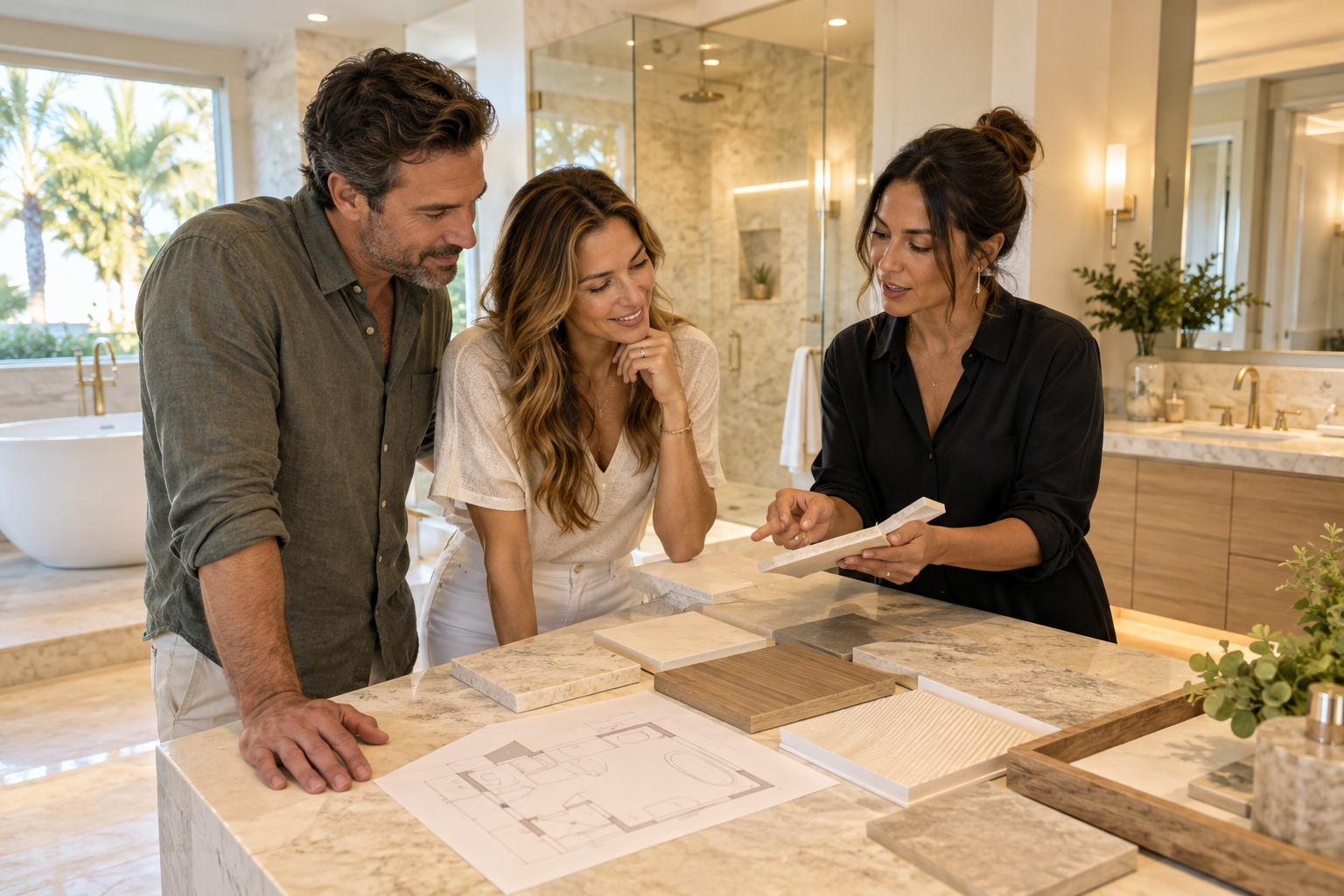
Human from the beginning
A bathroom should fit the people who use it.
We start with the everyday questions: What feels crowded? What is difficult to clean? Where do you need more storage? What would make mornings easier? Those answers help turn a collection of materials into a room that feels natural to live with.
Tell us about your bathroomCredentials, permits and paperwork
Ask what credentials the company holds for the work it does, and ask to see proof of them. Rules differ by city and by trade, so the most reliable source is your city building department. They can tell you what is required for the work you are planning and how you can verify that a company is properly set up to do it. Do not rely on a verbal assurance alone.
Ask whether the project needs a permit and who is responsible for obtaining it. Requirements vary from one city to another and sometimes from one building to another, so the answer for a house in one city may differ from a condo in the next. A good remodeler will not guess. They will tell you to confirm with the city, and they will explain what information they need from you to do that.
Ask about insurance in general terms, and request that proof of coverage be shared in writing. You can also ask who is responsible if a problem arises during the work. If you own a condo or live in a community with an association, check their rules separately; the guide on condo bathroom remodeling and your association lists the questions to bring to them.
Finally, ask for the answers in a form you can keep. A short email that summarizes what was discussed, or a section in the written scope, means you are not relying on anyone's memory. Companies that are comfortable putting their statements on paper tend to be comfortable being held to them, which is exactly what you want.
Questions about wet areas, which deserve extra attention
The shower and tub area is where a bathroom either holds up or does not, and most of the important work there is hidden once the tile goes on. Ask how the remodeler builds the shower floor, how it slopes to the drain, and what waterproofing system will sit behind the tile. You do not need to know every product, but you should hear a confident explanation of the layers.
Ask what is checked before tile begins. A careful crew inspects the substrate, tests the waterproofing in a way they can describe, and takes photographs of the hidden work. If that step is skipped, a small flaw can sit behind a wall for a long time. Our explainer on shower waterproofing shows what the layers are for.
Ask how ventilation is handled too. A new exhaust fan that is sized and vented correctly protects the finishes you just paid for, especially in Florida humidity. Ask where the fan will vent and whether the existing duct will be reused or replaced. See the guide on ventilation and humidity in Florida bathrooms for the background.
How to compare estimates without being misled
When estimates arrive, resist the urge to look at the bottom line first. Start by laying the documents side by side and checking whether they describe the same work. One estimate may include a new exhaust fan, a shower niche and blocking for grab bars, while another quietly leaves them out. Two documents that look different on the surface may actually be describing two different projects.
Look for the same level of detail in each. A page that lists tile, waterproofing, fixtures, lighting and cleanup by name is easier to compare than one that lists only a total. If a line says allowance, ask what it covers and what happens if your actual choice costs more or less than the allowance. The companion piece, understanding a bathroom remodeling estimate, goes through each part in detail.
If something is missing from one estimate, ask the company to clarify instead of assuming the worst. Sometimes the item is included under a different heading. Sometimes it really is left out. Either way, you will be comparing facts and not guesses, and you will have a fair basis for choosing the company that fits your project.

Recognizable when we arrive
The Hollywood Bathroom Remodeling van and team.
Consistent branding helps homeowners know who is arriving. The same organized presentation continues inside the project, from room protection and tools to the materials and details discussed before work begins.
See our processWhat to ask for in writing, and what to do next
Before work begins, you should have a written scope, a list of selections, a description of how changes are handled, and a plain statement of what is excluded. You should also have the name of your day to day contact and a rough order of work. Keep these documents together in one place so you can refer back to them.
Ask for photographs of hidden work as it happens, such as framing, waterproofing and plumbing behind the walls. Photographs cost nothing to take and are valuable if you later need to remember what is where. They also help if you sell the home and a buyer asks questions.
When you are ready to begin the conversation, you can tell us about your bathroom through the form on our home page. Use request an estimate and share what you know about the space, and we will take it from there. Bring this list of questions to any company you speak with, including us, and expect clear answers.
Good to know
Common questions
How many remodelers should I talk to?
Two or three is usually enough to see how different companies think about your project. More than that can become confusing, because the details blur together. Ask each one the same set of questions, take notes, and compare the answers along with the estimates. Choose the company whose answers you understood most clearly and whose approach you trust most.
Is it rude to ask about hidden conditions before work starts?
No. A good remodeler expects it. Older bathrooms often hide moisture damage, worn drain lines or soft framing, and nobody can see these until walls and floors are opened. Asking how those situations are handled shows that you are planning realistically, and it helps both sides avoid surprise disagreements later.
Should I buy my own tile and fixtures?
It can work, but only if responsibility is clear. Ask who checks quantities, condition and delivery, and who is responsible if an item arrives damaged or turns out to be the wrong size. Some homeowners prefer to hand selections to the remodeler for simplicity. Either way, put the decision in writing.
What should be in writing before demolition?
At minimum, the scope of work, the selections, what is excluded, how changes are approved, and your main point of contact. Many homeowners also like a rough order of work and a plan for protecting floors and nearby rooms. If something matters to you, write it down so it cannot be forgotten.
How do I check permit requirements?
Contact your city building department and describe the work you are planning. Requirements vary by city and by the type of work, and condos or communities may add rules of their own through the association. Your remodeler should be able to explain what information they need, but the city is the authority on what is required.
What if my remodeler and I disagree during the project?
Return to the written scope and selections, since that is what they exist for. Talk through the difference calmly and ask for any change to be described in writing before work continues. Most disagreements come from unclear expectations, and clear documents make them easier to settle fairly.
Your bathroom starts with a conversation